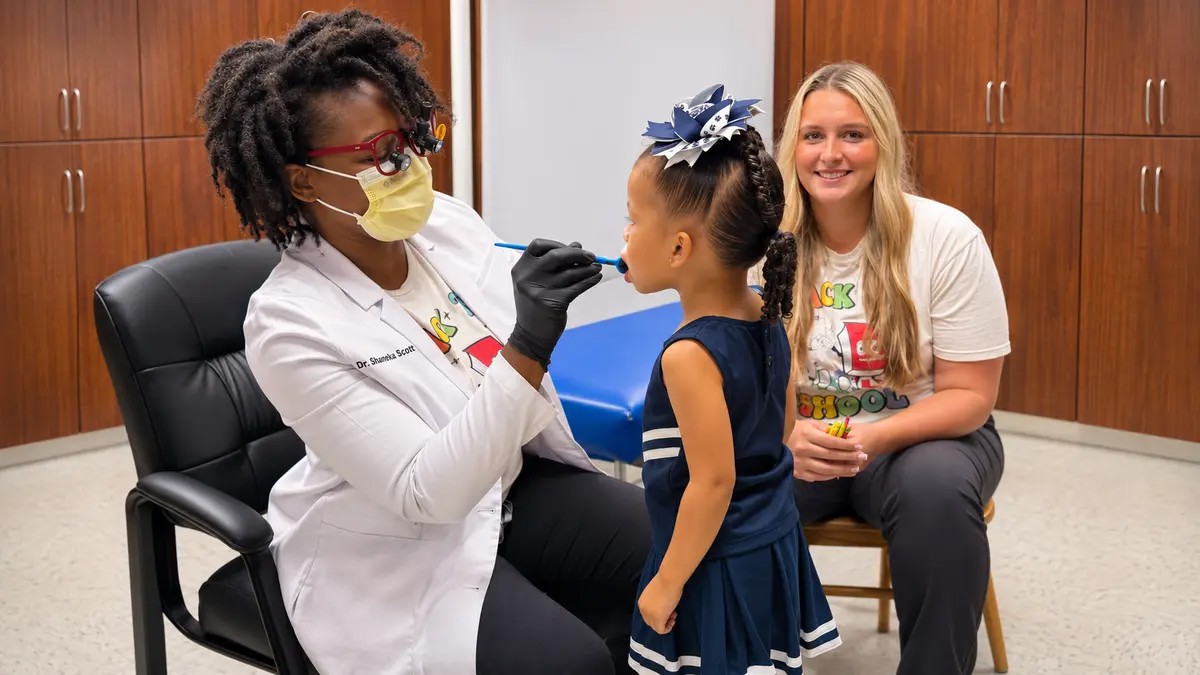
Category: Children’s Oral Health

Practical guidance for parents and caregivers on keeping children’s and teens’ teeth healthy.

  • Use Your Child’s Dental Benefits Before Year End: A Guide for Paris Families

    Use Your Child’s Dental Benefits Before Year End: A Guide for Paris Families

    Many dental benefit plans reset at the end of the year, but not all follow the same schedule. Families can check each child’s plan deadline now. If a child is due for care, contact Paris Children’s Dentistry early so the team can confirm current plan information and discuss scheduling options.

    The end of the year can be a practical time for families to review each child’s dental needs and any benefits available under the household’s plan. The deadline is not the same for every family. Some employer and individual plans use a calendar year, while others follow a different plan year. Medicaid and CHIP eligibility also follow their own renewal rules.

    A short review now can help parents and caregivers understand what the family plan says, what information the dental office needs for each child, and whether to discuss a visit before the plan year ends.

    Why year-end dental benefits matter

    The American Dental Association explains that many dental insurance plans have a December 31 deadline and that unused benefits do not roll over for most plans. Some plans use a different benefit year, so your plan documents and member services are the best sources for your exact deadline, covered services, deductibles, and other terms.

    Coverage is not a guarantee of payment. A plan may apply limitations, waiting periods, frequency rules, deductibles, copayments, coinsurance, prior authorization, or network requirements. Ask the plan what applies to your child before relying on an estimate.

    What parents can check now

    • Find the plan’s benefit year and the date current benefits reset.
    • Review each child’s recent explanation of benefits statements and the plan’s member portal for remaining benefits and limitations.
    • Ask whether preventive, diagnostic, or treatment services have different coverage rules.
    • Confirm whether the dental office currently participates with the plan.
    • Contact the dental office with the child’s current member information and ask about scheduling options.

    Keep notes from the plan, including the date, the representative’s name, and any reference number. Benefits quoted by a plan are still subject to the plan’s final processing of a claim.

    Families with employer or individual dental benefits

    Start with the plan’s summary of benefits or member portal. Look for the plan-year dates, annual maximum, deductible, network requirements, service frequency rules, and any authorization requirements. If the language is unclear, call the member-services number on the insurance card.

    Paris Children’s Dentistry provides current office guidance on its Insurance and Payment Options page. Because plan participation and benefit details can change, contact both the plan and the office to confirm current information for each child in your family.

    Families with Texas Medicaid or CHIP

    Texas Health Steps says dental checkups for children enrolled in Medicaid begin at 6 months of age. Its provider guidance recommends checkups every three to six months, but the schedule for an individual child should be determined by the child’s dental care team. Review the current Texas Health Steps member guidance and your child’s plan information.

    Medicaid and CHIP renewals do not automatically follow a December 31 dental-benefit reset. Watch for notices from Texas Health and Human Services, keep your contact information current, and respond to renewal requests by the stated deadline.

    For a local overview, read PCD’s Texas Medicaid and CHIP renewal guide. Eligibility, covered services, and payment decisions are controlled by the state and the child’s health plan. Contact the office and the plan to confirm current participation and benefit information.

    Families without dental insurance

    PCD’s Dental Plan page describes a Kleer-administered membership option that may help eligible families plan for dental expenses. It is not insurance, and current terms, eligibility, fees, and included services control. Review the page and contact the office with questions before enrolling or scheduling care.

    How PCD can help

    The PCD team helps Paris-area families review the plan information they provide, confirm the office’s current participation information, explain office payment options, and discuss scheduling options for their children. The office cannot determine state eligibility or guarantee how an insurance plan will process or pay a claim.

    Families searching for a dentist in Paris TX for their children can call 903-905-4905. Have each child’s current insurance or plan information available so the team can review the details with you.

    Frequently asked questions

    Do all dental benefits expire on December 31?
    No. Many plans use a December 31 deadline, but some use a different plan year. Check your plan documents or contact member services for the exact date.

    Do Medicaid or CHIP benefits automatically reset on December 31?
    No. Medicaid and CHIP eligibility renewals follow state and plan notices. Review messages from Texas Health and Human Services and your child’s health plan.

    How often should a child have a dental checkup?
    Texas Health Steps says dental checkups begin at 6 months of age and its provider guidance recommends visits every three to six months. Your child’s dental care team should determine the schedule that applies to your child.

    What options can families consider if a child does not have dental insurance?
    Review PCD’s Dental Plan and Insurance and Payment Options pages. Contact the office for current terms and to discuss the options that may apply to your family.

    Review your plan before the deadline

    Plan rules and deadlines vary. Review each child’s plan now, then call Paris Children’s Dentistry at 903-905-4905 to confirm current office information and discuss scheduling options for your family. The children’s dental office is located at 4300 Lamar Avenue in Paris, Texas.


  • Does My Child Need Dental X-Rays? A Parent’s Guide

    Does My Child Need Dental X-Rays? A Parent’s Guide

    Whether your child needs dental X-rays depends on their health history, examination findings, previous images, and individual dental needs. Ask what the recommended images will help the dentist evaluate and how that information may affect care. 1, 2

    Why might a child need dental X-rays?

    Some dental concerns cannot be fully assessed by looking inside the mouth. Depending on the situation, images can help a dentist evaluate tooth decay, an injury, or how teeth are developing. The reason for the image should come from your child’s examination and history. 1, 2, 3

    For example, a recommendation after a tooth injury may answer a different question from images used to evaluate tooth development. Ask the dentist to explain the purpose in language you and your child understand. 2, 3

    How often should children have X-rays?

    There is no single schedule that fits every child. Age, tooth development, current findings, and risk of dental disease all help guide the decision. A checkup does not automatically mean the same images are needed at every visit. 1, 2, 3

    Tell the dental team when and where your child last had images taken. Previous images may help answer the current question and should be considered before additional imaging is recommended. Whether they are sufficient is a clinical decision. 1, 2

    What about radiation safety?

    Dental X-rays use ionizing radiation. The decision should balance the information needed for care against the exposure involved, with particular attention to children. Current professional recommendations emphasize selecting images for a clinical reason and using methods that limit exposure. 1, 2, 3

    The dose varies with the type of image, equipment, and technique. Rather than relying on a broad comparison with background radiation, ask which images are recommended and why. For questions about protective equipment, ask the dentist to explain the guidance and practices that apply to your child’s visit. 1, 2

    Four questions to bring to the visit

    1. What question will these images help answer?
    2. Can previous images provide the information you need?
    3. How could the findings change the care you recommend?
    4. What can we do to help my child feel prepared?

    Common parent questions

    Does a new patient always need new X-rays?

    Not automatically. The dentist should consider the examination, history, disease risk, and available previous images before deciding. 1, 2

    Can an X-ray replace the dental examination?

    No. Imaging supports the clinical evaluation; it does not replace it. Recommendations should follow a review of the child’s history and an examination. 1, 2

    What if my child is anxious?

    Tell the team before the visit and ask how to prepare. Discuss any difficulty your child has had with dental imaging so the dentist can consider it when planning care.

    Talk with a children’s dental office in Paris, Texas

    Have questions about your child’s recommended X-rays? Call Paris Children’s Dentistry at 903-905-4905 to discuss the visit. Our office is at 4300 Lamar Ave., Paris, TX 75462. You can also review our preventive-care information before your appointment. 4, 5

    This article provides general education. Your child’s dentist determines whether imaging is appropriate after considering their individual circumstances.

    Sources

    1. American Dental Association: X-Rays/Radiographs
    2. ADA/AAOMR: Patient selection for dental radiography and cone-beam computed tomography (2026)
    3. AAPD: Prescribing Dental Radiographs
    4. PCD: Contact and office information
    5. PCD: Preventive care
  • How to Renew Texas Medicaid or CHIP and Keep Your Child’s Dental Coverage Active

    How to Renew Texas Medicaid or CHIP and Keep Your Child’s Dental Coverage Active

    The short answer: Review every notice from Texas Health and Human Services, confirm that your contact information is current, and complete the requested renewal steps by the deadline in your notice. You can manage many renewal tasks through Your Texas Benefits. If you need assistance, call 2-1-1 or 877-541-7905 and choose Option 2.

    A renewal notice can be easy to overlook, especially when a family is balancing school, work, appointments, and everything else on the calendar. But waiting too long can create uncertainty about whether a child’s medical and dental benefits remain active.

    Paris Children’s Dentistry accepts Texas Medicaid and CHIP for eligible patients. Our team can help families understand what information we need to verify coverage for an appointment, but we cannot renew benefits, decide eligibility, or guarantee that a service will be covered. Those decisions belong to Texas Health and Human Services and the child’s dental plan.

    In this article

    1. When Texas Medicaid or CHIP coverage needs to be renewed
    2. How to check a renewal date or case status
    3. How to complete the renewal process
    4. What to do if coverage has ended or is still pending
    5. Dental services that may be covered
    6. How Paris Children’s Dentistry can help
    7. Frequently asked questions

    When does Texas Medicaid or CHIP coverage need to be renewed?

    Texas HHSC reviews eligibility for health-benefit programs periodically. For many families, that review happens about every 12 months, but the date and required steps can differ by case. CHIP enrollment also follows an eligibility period and requires families to respond when it is time to renew.

    Do not rely only on a date you remember from last year. The official HHSC notice and the family’s Your Texas Benefits account are the sources that control the renewal deadline. Some cases may be renewed using information already available to the state, but families should not assume renewal is automatic. Read every notice and respond when HHSC requests information.

    How can I check my renewal date or case status?

    Start with these steps:

    • Sign in to YourTexasBenefits.com or the Your Texas Benefits mobile app and review the case status and notices.
    • Confirm that HHSC has the family’s current mailing address, phone number, and email address.
    • Open any notice marked for renewal, missing information, or action required.
    • Use the deadline and instructions printed in the official notice rather than relying on a social-media post or an old form.
    • Upload or return requested documents as soon as possible and keep confirmation of what was submitted.

    How do I renew Texas Medicaid or CHIP?

    Many families can renew online through Your Texas Benefits. Depending on the case and the notice received, HHSC may also allow a signed renewal to be submitted by mail, fax, or phone. Follow the instructions provided for the family’s specific case.

    Renew online

    Sign in to YourTexasBenefits.com, open the case, and select the renewal action shown in the account. Review all household information carefully before submitting.

    Respond to the renewal packet

    If HHSC mails a renewal form or asks for additional documents, complete the required sections, sign the form, and return it using one of the methods listed in the notice.

    Ask HHSC for help

    For help with benefits or the website, call 2-1-1 or 877-541-7905, select a language, and choose Option 2. The Medicaid Client Hotline at 800-252-8263 can answer Medicaid benefit questions.

    Important: Phone numbers and procedures can change. Use the contact information in the family’s current HHSC notice when it differs from general public guidance.

    What if my child’s coverage ended or the renewal is still pending?

    Contact HHSC promptly to confirm the case status, determine whether information is missing, and learn which options are available. If the child has a dental plan, the number on the member card can also help the family confirm current dental benefits and plan requirements.

    Do not assume that an appointment is covered simply because a child had coverage previously. Call Paris Children’s Dentistry before the visit so our team can request the current member information and verify the plan information available to us. Verification is not a guarantee of payment, and final coverage decisions remain with the plan.

    If a child has dental pain, swelling, bleeding, an injury, or another urgent concern, call the office for guidance rather than delaying care while waiting for an eligibility question to be resolved.

    What dental care may Texas Medicaid or CHIP cover?

    Texas Medicaid and CHIP provide dental coverage for eligible children. Current Texas dental-plan materials describe benefits that may include examinations, cleanings, fluoride treatments, X-rays, fillings, crowns, root canals, extractions, and other medically necessary treatment.

    The exact benefit, frequency limit, dental-home requirement, and prior-authorization rule can depend on the program, dental plan, child’s age, and clinical circumstances. Families should confirm current benefits with the dental plan instead of relying on a general list.

    How Paris Children’s Dentistry can help

    Our team can:

    • Tell you whether PCD currently participates with the dental plan information you provide.
    • Request the member ID and other information needed to check available eligibility records.
    • Explain what information is needed before an appointment can be confirmed under the plan.
    • Discuss current self-pay or in-house dental-plan options if coverage is inactive or unavailable.

    PCD cannot submit a Medicaid or CHIP renewal for a family, decide whether someone qualifies, change a Main Dentist assignment, or promise that a treatment will be paid. HHSC and the dental plan control those decisions.

    For more detail about plans and payment options, visit our insurance and payment options page.

    Frequently asked questions

    Does Texas Medicaid or CHIP renew automatically?

    Some cases may be renewed using information already available to HHSC, but families should not assume that will happen. Review every HHSC notice and the current Your Texas Benefits case status.

    What should I do if I did not receive a renewal notice?

    Sign in to Your Texas Benefits and confirm the case status and contact information. If help is needed, call 2-1-1 or 877-541-7905 and choose Option 2.

    Can Paris Children’s Dentistry renew my child’s benefits?

    No. PCD can help with appointment and dental-plan information, but only HHSC can process the renewal and determine eligibility.

    Should I cancel a dental visit while renewal is pending?

    Call PCD before canceling. The team can review the information available, explain payment options, and help the family decide the appropriate next step. Coverage cannot be guaranteed until the plan confirms it.

    What documents will HHSC require?

    The required documents depend on the family’s circumstances. Follow the checklist in the current renewal notice and provide only the information HHSC requests through an approved submission method.

    Keep the renewal notice and the dental appointment on the same checklist

    The safest approach is simple: keep contact information current, read every HHSC notice, respond by the stated deadline, and save confirmation of the renewal submission. Once the family’s current dental-plan information is available, contact Paris Children’s Dentistry so the team can verify what it can before the appointment.

    Need to plan your child’s next dental visit? Call Paris Children’s Dentistry at (903) 905-4905 or request an appointment online. Our office is located at 4300 Lamar Avenue in Paris, Texas.
    General-information notice: This article does not determine eligibility, promise coverage, or replace instructions from Texas HHSC or a dental plan. Benefit rules and contact information may change.

    Sources and evidence

    Sources reviewed October 24, 2026. Verify renewal instructions and plan benefits again immediately before publication.

    Plan Dental Care With Confidence

    Review PCD’s current insurance and payment information, explore our dental services, or call 903-905-4905 with coverage questions.

  • Are Halloween Costume Fangs Safe? What to Use, Avoid, and Do If They Stick

    Are Halloween Costume Fangs Safe? What to Use, Avoid, and Do If They Stick

    Yes—Halloween costume fangs can be safe for older children and teens when they fit comfortably, are worn only for a short time, and come out easily without glue. The bigger risk is using nail glue, super glue, or craft adhesive to make fake teeth stay in place. Those products are not made for the mouth and can injure gums or lips and damage enamel or existing dental work.

    As a dentist and a mother, I understand why parents want to say yes to a fun costume while still protecting their child’s smile. My practical rule is simple: if costume teeth do not fit without forcing them or reaching for household glue, skip the fangs and use makeup instead.

    With Halloween approaching, here is what I want families in Paris, Texas, to know about Halloween costume teeth safety.

    For more help planning the holiday, see our guide to Halloween candy and kids’ teeth.

    The Glue Is the Real Problem

    Every few years, a do-it-yourself fang trend makes the rounds online. It usually involves shaping acrylic nails or plastic fangs and attaching them to real teeth with nail glue.

    Please do not try it. Nail glue, super glue, and craft adhesives are not formulated for oral tissue. They can irritate or chemically burn the gums, lips, or cheeks. Once an adhesive hardens on a tooth, trying to remove it can damage enamel. It may also loosen a crown, veneer, filling, or bonded material.

    Do not substitute another household product or solvent. “Not as strong as super glue” does not mean “safe for the mouth.”

    Safer Ways to Create the Look

    • Choose well-fitting, store-bought fangs. Use them exactly as the package directs. They should sit comfortably without pinching the gums or putting pressure on the teeth.
    • Keep wear time short. Costume teeth are for the costume—not for eating, drinking, or sleeping.
    • Use makeup for a no-risk alternative. A little dark lip liner and shading can create a convincing vampire look without putting anything over the teeth.
    • Ask before using an oral adhesive. If a product needs help staying in place, check the instructions and ask your dentist whether a mouth-safe product is appropriate for your child. Never improvise with nail or craft glue.

    Costume Teeth Safety Rules for Kids

    For young children—especially children under about age six—I recommend skipping removable costume teeth altogether. Small, hard objects placed in a little mouth can become a choking hazard. Makeup is the safer choice.

    • Never eat with fangs in. Chewing can crack the plastic, dislodge the appliance, or put unwanted pressure on the real teeth underneath.
    • Never sleep in them. Remove costume teeth before bed every time.
    • Clean them before and after use. Follow the manufacturer’s care directions and do not share them with anyone else.
    • Stop if they hurt or trigger gagging. Pain is a sign that the fit is wrong—not something a child should push through for the costume.
    • Supervise wear. Check periodically that the fangs are secure, comfortable, and easy to remove.

    Why Fit Matters

    Costume teeth are made for an average-sized mouth, which means they will not fit every child. A loose set can slip or tempt someone to add glue. A tight set can rub the gums or put pressure on teeth that are loose, erupting, or sensitive.

    If your child cannot wear the fangs comfortably and keep them in place without holding, biting, or gluing them, the fit is not right. Switching to makeup is the smart move.

    What About Braces, Crowns, or Bonding?

    Children and teens with braces should usually avoid costume teeth. Plastic fangs can catch on brackets or wires, and removing a stuck piece may bend or dislodge part of the appliance.

    The same extra caution applies to crowns, veneers, bonding, and large fillings. Household adhesives can stick to dental materials, and pulling a fang loose could damage the restoration. When in doubt, choose makeup.

    What to Do if Costume Fangs Get Stuck

    Call a dental office before trying to pry the fangs off. Do not use fingernails, tools, pliers, acetone, or another household solvent, and do not yank them off quickly. Those attempts can turn a manageable problem into a chipped tooth, damaged dental work, or an injured gum.

    If this happens in Paris, call Paris Children’s Dentistry at (903) 905-4905 and tell us what product was used, when it was applied, and whether your child has pain, bleeding, or damage to a real tooth. We can help you decide what to do next.

    Significant pain, bleeding, or a broken real tooth needs prompt attention. If a child is choking, struggling to breathe, or cannot speak or cough, call 911 immediately.

    Frequently Asked Questions

    Are costume-store vampire fangs safe for teeth?

    Generally, they can be safe for short, supervised wear by older children and teens if they fit comfortably without household adhesive and are removed before eating, drinking, or sleeping.

    Can my child use nail glue or super glue for fake teeth?

    No. These products are not made for use in the mouth. They can injure soft tissue and may damage enamel, crowns, fillings, bonding, or braces.

    Can costume fangs damage braces?

    Yes. Costume teeth can catch on brackets and wires. Makeup is a safer option during orthodontic treatment.

    What if my child swallows part of a costume tooth?

    Call your child’s physician for guidance. If your child is choking or having difficulty breathing, call 911.

    Have the Spooky Night—and Keep the Real Teeth Safe

    A fun costume should not create a dental emergency. Choose fangs that fit, keep wear time short, supervise your child, and never use household glue. If the fangs do not fit comfortably, makeup is the easy answer.

    Questions before Halloween—or a costume-teeth problem afterward? Call Paris Children’s Dentistry, your family dentist in Paris, TX, at (903) 905-4905. We accept Texas Medicaid and CHIP and offer an in-house plan for families without insurance.

    Get Help for an Urgent Dental Concern

    Review our emergency dentistry guidance for pain, swelling, injuries, or damaged teeth. For ongoing care, explore preventive dental services.

  • How Often Should You Replace Your Child’s Toothbrush?

    How Often Should You Replace Your Child’s Toothbrush?

    Replace your child’s manual toothbrush or electric brush head every three to four months—or sooner if the bristles become frayed, matted or splayed. Children who chew the bristles or brush with heavy pressure may need a replacement sooner.

    A toothbrush is easy to overlook because it does not come with an obvious expiration date. It may still look familiar sitting beside the sink even after the bristles have started to wear.

    A new national survey shows how common that is. In October 2026, Delta Dental reported that only 55% of U.S. adults replace their toothbrush every three months. Among adults who do not replace it on schedule, 46% said they forget, 42% wait until the bristles look worn and 30% do not think to buy one during routine shopping.

    The same survey included encouraging news: parents reported that 75% of children brush twice daily, up from 67% the year before, and 64% floss daily, up from 50%. Families are building better habits. A simple replacement routine can help those habits work as intended.

    How Often Should You Replace a Child’s Toothbrush?

    The American Dental Association recommends replacing a toothbrush every three to four months. Replace it sooner when the bristles become frayed or matted. The same schedule applies to a replaceable electric toothbrush head.

    The calendar is only a starting point. Some children wear out a brush faster because they chew the bristles or press firmly while brushing. Look at the brush regularly instead of waiting for a reminder four months from now.

    Signs the Toothbrush Should Be Replaced Sooner

    Replace your child’s toothbrush or brush head before the three-to-four-month mark if you notice:

    • Bristles bending or spreading outward
    • Frayed, flattened or matted bristle tips
    • A child chewing the brush until the head loses its shape
    • Damage to the handle or brush head
    • Contamination from being dropped somewhere unsanitary

    Color-fading indicator bristles can be a useful reminder, but they are not the only sign. The shape and condition of the bristles matter too.

    Why Worn Bristles Matter

    Brushing works best when the bristles can make gentle contact with the tooth surfaces and along the gumline. As bristles wear, they may become less effective at removing plaque. A child can still complete the same two-minute routine while using a brush that is no longer in good condition.

    This is not a reason to worry or throw away a brush after a few weeks. It is simply a reason to check it regularly and replace it when the bristles begin to lose their shape.

    Six Simple Toothbrush Rules for Families

    1. Use the three-to-four-month rule. Replace the brush sooner when the bristles show wear.
    2. Choose soft bristles. The ADA recommends a soft-bristled brush and gentle pressure to help reduce the risk of gum injury.
    3. Brush twice a day. Help children brush for two minutes each time with an age-appropriate amount of fluoride toothpaste.
    4. Rinse and air-dry. Rinse the brush after use and store it upright where it can air-dry.
    5. Do not share. Toothbrushes should never be shared, including between siblings.
    6. Keep a spare available. A multipack in the cabinet makes replacement easier when you notice worn bristles.

    If you are also reviewing what is inside the tube, see our guide to checking the fluoride label on children’s toothpaste.

    Manual or Electric: Which Is Better for a Child?

    Either a manual or electric toothbrush can work when it is used correctly and consistently. The better choice is usually the brush your child can use comfortably with help from an adult.

    An electric brush may make the routine more engaging, and a built-in timer can help children reach two minutes. A manual brush is simple, affordable and effective with proper technique. Whichever type your family chooses, select soft bristles and replace the brush or head on schedule.

    How Long Should Adults Help With Brushing?

    Young children usually need hands-on help because effective brushing requires more coordination than it appears. The ADA encourages parents to help children brush until they can do it well independently, which is often around age 8.

    One practical approach is to let your child brush first and then have an adult finish the harder-to-reach areas, especially the back teeth. If brushing is difficult because of comfort, coordination or sensory needs, ask the dental team for an individualized routine.

    Do You Need a New Toothbrush After an Illness?

    Not necessarily. ADA consumer guidance says you probably do not need to replace a toothbrush after a cold or flu because the chance of reinfecting yourself is very low. The most important rule is never to share toothbrushes, especially while someone is sick.

    If the brush is already near the end of its three-to-four-month window, replacing it can still be a convenient way to reset the schedule.

    Frequently Asked Questions

    How often should I replace my child’s electric toothbrush head?

    Replace it every three to four months, or sooner if the bristles become frayed, matted or spread outward.

    What if my child chews the toothbrush?

    Check the bristles more frequently and expect to replace the brush sooner. If chewing makes brushing difficult or seems connected to a sensory need, mention it at your child’s next visit.

    Are hard bristles better for removing plaque?

    No. The ADA recommends soft bristles with gentle pressure. Effective technique and brushing for two full minutes matter more than using a stiffer brush.

    Can siblings share a toothbrush?

    No. Each family member should have a separate toothbrush, even if the brush is rinsed between uses.

    Make Toothbrush Replacement Easy to Remember

    The most useful system is the one your family will remember. You could replace brushes at the beginning of each season, subscribe to automatic replacements or keep unopened spares in the bathroom cabinet. The goal is not a perfect calendar—it is noticing wear and having a replacement ready.

    Paris Children’s Dentistry provides preventive and restorative dental care for children, teens, adults and caregivers in Paris, Texas. If your family is due for a checkup, request an appointment online or call (903) 905-4905.

    Sources and Evidence

    1. Delta Dental, 2026 State of America’s Oral Health and Wellness Report findings, October 8, 2026.
    2. American Dental Association: Toothbrushes.
    3. MouthHealthy: Healthy Habits for Babies and Kids.
    4. MouthHealthy: Cold and Flu Season.

    Continue Your Child’s Preventive Care

    Learn more about preventive dentistry in Paris, TX, prepare for a child’s first dental visit, or review all children’s and family dental services.

  • Natural Toothpaste for Kids: How to Check the Fluoride Label

    Natural Toothpaste for Kids: How to Check the Fluoride Label

    Natural toothpaste can contain fluoride—but some products do not, and the word “natural” does not tell you how much cavity protection is inside the tube. For most children, brushing twice a day with the right amount of fluoride toothpaste is an important part of preventing cavities. The quickest check is to turn the tube over and read the active-ingredient label.

    Parents have more toothpaste choices than ever: natural, herbal, fluoride-free, whitening, charcoal and products made especially for children. Those descriptions may explain a product’s flavor or ingredients, but they do not answer the question that matters most for cavity prevention: Does this toothpaste contain fluoride?

    At Paris Children’s Dentistry, we want families to feel confident about what they are using—not judged for the brand they choose. Here is a simple way to check the label and know what questions to ask at your child’s next visit.

    Does Natural Toothpaste Contain Fluoride?

    Some natural toothpastes contain fluoride, while others are intentionally fluoride-free. You cannot reliably tell from the product name, flavor or pictures on the front of the package. Look at the Drug Facts or active-ingredients panel instead.

    A study published in BDJ Open examined 15 commercially available herbal toothpastes sold in Thailand. Ten contained less than 600 parts per million of fluoride, while only three contained about 1,500 ppm. This finding is useful, but its limits matter: the study evaluated a small group of products from the Thai market, not the toothpaste selection sold in Paris, Texas or throughout the United States. It should not be used as a blacklist of brands.

    The practical takeaway is much simpler: marketing language on the front of a tube cannot replace checking the active ingredient on the back.

    Why Is Fluoride Added to Toothpaste?

    Fluoride helps strengthen tooth enamel and can help repair early areas of mineral loss before they become cavities. That is why fluoride toothpaste is widely recommended as part of children’s daily oral care when it is used in the correct amount.

    A toothpaste may still clean the teeth or improve breath without fluoride, but it will not provide the same fluoride-based cavity protection. Families considering a fluoride-free product should discuss the choice with their child’s dentist, especially if the child has had cavities, wears braces, snacks frequently or has other factors that increase cavity risk. For more background, read our guide, Is Fluoride Safe for Children?

    How to Read Your Child’s Toothpaste Label

    Turn the tube over and check these four items:

    • Active ingredient: Look for a fluoride ingredient such as sodium fluoride, stannous fluoride or sodium monofluorophosphate.
    • Fluoride amount: Some labels show parts per million, while others show the active ingredient as a percentage. If the number is unclear, take a photo and ask your dental team to help interpret it.
    • Age and use directions: Follow the package directions and use only the small amount recommended for your child’s age.
    • ADA Seal of Acceptance: The ADA Seal can be a useful shortcut because accepted cavity-protection toothpastes must meet the program’s requirements for safety and effectiveness.

    How Much Fluoride Toothpaste Should a Child Use?

    The amount on the toothbrush matters just as much as the product in the tube:

    • Younger than age 3: Use a smear about the size of a grain of rice.
    • Ages 3 through 6: Use no more than a pea-sized amount.
    • Young children: An adult should dispense the toothpaste and supervise brushing so the child uses the right amount and learns to spit it out.

    If your child regularly swallows toothpaste, do not add more toothpaste in hopes of getting more protection. Use the recommended amount, keep the tube out of reach and ask your child’s dentist for help with brushing routines. For a suspected large ingestion or symptoms after exposure, contact Poison Control at 1-800-222-1222 or seek medical guidance.

    Is Fluoride Toothpaste Safe for Kids?

    Fluoride toothpaste is considered safe when it is used as directed and in an age-appropriate amount. The rice-grain smear and pea-sized guidance help children receive the cavity-prevention benefit while limiting how much they may swallow as they learn to brush.

    Every child’s needs are different. A child with frequent cavities may need a different prevention plan than a child with a low cavity risk. Your dental team can consider your child’s age, brushing ability, diet, cavity history and other fluoride sources before making a recommendation.

    What About Fluoride-Free, Charcoal or Whitening Toothpaste?

    Fluoride-free toothpaste is a deliberate choice for some families and an accidental purchase for others. If you choose one, make sure you understand what protection it does—and does not—provide, and ask what other preventive steps may be appropriate for your child.

    Teens may also be drawn to charcoal or whitening products. These products vary widely, and some may be more abrasive or may not contain fluoride. Before a teen makes one part of a daily routine, check the active ingredient and ask the dental team whether it fits that teen’s needs.

    A Two-Minute Toothpaste Check for Parents

    1. Find the active-ingredients panel.
    2. Confirm whether the product contains fluoride.
    3. Review the age directions.
    4. Use a rice-grain smear or pea-sized amount, depending on age.
    5. Take a photo of the label if you want your dental team to review it.

    Bring the Tube—or a Photo—to Your Next Visit

    You do not need to solve every toothpaste decision in the store aisle. Bring the tube, or a clear photo of the front and back labels, to your child’s next visit at Paris Children’s Dentistry. We can review it with you and help match the product to your child’s age and cavity risk.

    To schedule a checkup with a children’s dentist in Paris, TX, call Paris Children’s Dentistry at (903) 905-4905 or plan your visit online. Our office is located at 4300 Lamar Avenue in Paris, Texas.
    Sources

    • Poeaim N. et al. “Cytotoxicity, antibacterial efficacy, and fluoride content of commercial herbal toothpastes.” BDJ Open, October 2026.
    • American Dental Association guidance on fluoride toothpaste use for young children.

    Continue Your Child’s Preventive Care

    Learn more about preventive dentistry in Paris, TX, prepare for a child’s first dental visit, or review all children’s and family dental services.

  • Halloween Candy and Kids’ Teeth: A Simple Plan for Paris Families

    Halloween Candy and Kids’ Teeth: A Simple Plan for Paris Families

    Halloween candy does not have to mean cavities.

    Children can enjoy their favorite treats while parents take a few practical steps to protect their teeth. The most helpful approach is to serve candy with or soon after a meal, avoid all-day grazing, offer plain water, and keep brushing and flossing consistent.

    At Paris Children’s Dentistry, we want families to enjoy Halloween without turning it into a battle over every piece of candy. Here is a realistic plan that can help.

    Is Halloween candy bad for kids’ teeth?

    Candy can increase the risk of tooth decay because bacteria in the mouth use sugar to produce acids. Those acids can weaken tooth enamel over time.

    But the total amount of candy is not the only consideration. How often a child eats it—and how long the teeth are repeatedly exposed—also matters.

    When children snack on candy throughout the day, the mouth experiences repeated acid exposures with less time to recover. Serving a few selected treats at one planned time is generally easier on the teeth than letting children graze from their candy bag all afternoon.

    Why does the timing of Halloween candy matter?

    A helpful rule is to offer Halloween candy with a meal or shortly afterward.

    Saliva production increases during meals. Saliva helps wash away food particles, neutralize acids, and support the minerals that protect tooth enamel. The American Dental Association recommends limiting frequent sugary snacking and enjoying treats with meals when possible.

    Try establishing a predictable “candy time” after dinner rather than allowing unrestricted access throughout the day. This gives children a chance to enjoy their treats while reducing repeated exposure.

    Which Halloween candy is toughest on children’s teeth?

    Some candies remain on the teeth longer or expose enamel to additional acids.

    Sticky and gummy candy

    Gummies, caramels, taffy, and similar candies can cling to grooves and spaces between the teeth. Because they are harder for saliva to clear, sugar may remain in contact with the teeth longer.

    Hard candy

    Hard candy and lollipops dissolve slowly, extending the time teeth are exposed to sugar. Biting hard candy can also chip or crack a tooth.

    Sour candy

    Sour candies are often both sugary and acidic. That combination can temporarily soften the enamel, making sour candy one of the more challenging choices for teeth.

    Chocolate

    Plain chocolate generally clears from the mouth more quickly than sticky or hard candy. It still contains sugar, but a small amount of chocolate eaten at one planned time is typically a more tooth-friendly option than candy that sticks to the teeth or is sucked for a long period.

    A simple Halloween candy plan for parents

    You do not need an elaborate system. Start with these practical steps.

    1. Choose a few favorites

    After trick-or-treating, let your child select the candy they are most excited to eat. Keeping the favorites can make it easier to remove treats they do not especially want.

    2. Establish a planned candy time

    Offer candy with dinner or shortly afterward instead of allowing children to snack on it throughout the day.

    3. Serve plain water

    Water helps rinse away loose food particles and sugars. It is a better companion to candy than juice, soda, sports drinks, or other sweet beverages.

    4. Keep the regular bedtime routine

    Brush for two minutes with fluoride toothpaste and clean between teeth as appropriate for your child’s age and development.

    Parents may need to assist younger children to make sure every surface is cleaned. Avoid sending a child to bed immediately after eating candy without brushing.

    5. Put the remaining candy away

    Store candy somewhere out of sight rather than leaving the bowl or bag within easy reach. A planned portion is easier to manage when the full supply is not constantly visible.

    Should children brush immediately after sour candy?

    Not immediately.

    Because sour candy is acidic, it can temporarily soften the enamel. Brushing while the enamel is softened may increase wear.

    After sour candy, have your child rinse with plain water and wait approximately one hour before brushing. The ADA provides the same wait-time guidance after acidic foods and drinks.

    For other candy, maintain the child’s usual brushing routine and avoid aggressive brushing.

    Can sugar-free gum help?

    For children who are old enough to chew gum safely, sugar-free gum with the ADA Seal can be helpful after eating.

    Chewing sugar-free gum for about 20 minutes stimulates saliva, which helps clear food and neutralize acids. Gum does not replace brushing or flossing, but it can be a useful addition when brushing is not immediately available.

    When should you call a children’s dentist?

    Contact a children’s dental office if your child experiences:

    • Ongoing tooth pain or sensitivity
    • Swelling around a tooth or the gums
    • A chipped or broken tooth
    • A dark spot or visible hole in a tooth
    • Pain when biting or chewing
    • An injury involving the teeth or mouth

    A routine preventive dental visit can also help identify small concerns before they become painful or require more involved treatment.

    Paris Children’s Dentistry provides preventive and restorative dental care for children and accepts Texas Medicaid and CHIP. If your child is due for a checkup—or you have a concern after Halloween—call 903-905-4905 or request an appointment with our Paris, Texas team.

    Frequently asked questions

    Do children need to avoid Halloween candy completely?

    No. A planned portion, plain water, and consistent brushing are more realistic than banning every treat.

    Is chocolate better for teeth than gummy candy?

    Plain chocolate generally clears from the mouth faster than sticky gummies, caramels, and taffy. Portion size and frequency still matter.

    Should children brush immediately after eating candy?

    Follow the normal brushing routine for most candy. After sour or acidic candy, rinse with water and wait approximately one hour before brushing.

    What is the best drink to serve with Halloween candy?

    Plain water is the simplest choice. Avoid combining candy with soda, juice, or other sweetened beverages.

    What if my child already has tooth pain?

    Do not wait for the discomfort to become severe. Call our children’s dental office for guidance, particularly if pain is accompanied by swelling, fever, or difficulty eating.

    Continue Your Child’s Preventive Care

    Learn more about preventive dentistry in Paris, TX, prepare for a child’s first dental visit, or review all children’s and family dental services.

  • Does Screen Time Affect Kids’ Teeth? Five Practical Ways to Lower Cavity Risk

    Does Screen Time Affect Kids’ Teeth? Five Practical Ways to Lower Cavity Risk

    Short answer: Screen time does not directly cause cavities. The risk comes from habits that often happen around screens—frequent snacking, sipping sugary drinks, rushing bedtime brushing, and letting devices interfere with sleep and routines.

    Parents often ask us about screen time and kids’ teeth. The good news is that families do not need an all-or-nothing screen rule to protect a child’s smile. A few practical changes can reduce cavity risk without adding more stress to the day.

    Paris Children’s Dentistry is a family dentist in Paris, TX, serving children, teens, and adults. Here is what families should know about screens, snacks, brushing, and children’s cavity prevention.

    Can screen time cause cavities?

    Not by itself. A tablet, phone, television, or video game does not damage tooth enamel simply because a child uses it. The concern is what may happen during or after screen time:

    • A child grazes on crackers, candy, or other snacks for a long period.
    • Juice, soda, sports drinks, or sweetened milk are sipped throughout a show or game.
    • “One more episode” pushes brushing later—or brushing gets skipped entirely.
    • A busy caregiver assumes a young child brushed well without checking.

    Cavity-causing bacteria use sugars and starches to produce acids. Repeated snacking and sipping give those acids more opportunities to attack tooth enamel. That is why the pattern around screen use matters more than the screen itself.

    Why do snacks during screen time matter?

    When children eat while focused on a screen, they may snack slowly and lose track of how long they have been eating. Teeth are then exposed to food or sweet drinks again and again instead of getting a break between meals.

    For a more tooth-friendly routine, serve snacks at the table and offer plain water during shows or games. The American Dental Association recommends water as the best everyday beverage for oral health. Water helps rinse the mouth without adding sugar or acid.

    Five screen-smart ways to protect kids’ teeth

    1. Keep snacks and screens separate

    Have children finish snacks at the table before turning on a device. This simple boundary can reduce mindless grazing and makes it easier for parents to know what—and how much—a child ate.

    2. Make water the screen-time drink

    Save juice and other sweet drinks for mealtimes when possible. During a movie, game, or homework session, choose plain water. This limits repeated sugar exposure and supports hydration.

    3. Brush before evening devices

    Do not leave brushing until everyone is tired. Build the bedtime brushing routine first: brush for two minutes with fluoride toothpaste, floss where teeth touch, and then allow the planned screen time. Young children usually need hands-on help, and many older children still benefit from supervision.

    4. Give devices their own bedtime

    Create a charging spot outside the bedroom. A consistent device cutoff can make the bedtime routine more predictable and reduce the chance that brushing is delayed or forgotten.

    5. Use a timer or song for brushing

    A two-minute timer or familiar song can help children brush long enough without turning brushing itself into more screen time. Keep the routine simple and repeatable.

    What should parents watch for?

    Early cavities are not always painful. Schedule a dental visit if you notice white or brown spots on teeth, sensitivity, tooth pain, swelling, persistent bad breath, or a change in eating. Regular checkups can identify concerns before they become emergencies.

    During a children’s dental checkup in Paris, TX, our team may ask about snacks, drinks, brushing, and bedtime routines. These questions are not about blame. They help us understand a child’s cavity risk and recommend realistic next steps. Depending on the child’s needs, preventive care may include professional cleanings, fluoride treatment, and dental sealants.

    Frequently asked questions

    Do we need to eliminate screen time to protect our child’s teeth?

    No. Focus first on the habits that most directly affect teeth: limit grazing, choose water between meals, and keep brushing consistent. Your child’s medical provider can help your family set broader screen-time goals.

    Is juice okay during screen time?

    Water is the better choice. Frequent sipping keeps teeth exposed to sugar and acid for longer. If you serve juice, offer it with a meal rather than over an extended screen session.

    How often should children have dental checkups?

    Many children benefit from preventive visits about every six months, but the right schedule depends on individual needs and cavity risk. Your dentist may recommend a different interval.

    Does Paris Children’s Dentistry treat adults?

    Yes. Despite our name, Paris Children’s Dentistry is a family dental practice that treats children, teens, and adults. Families can receive care in one familiar office.

    Schedule a family dental visit in Paris, Texas

    If it has been a while since your family’s last visit, we can help you get back on track. Paris Children’s Dentistry provides family dental care for children and adults and accepts Texas Medicaid and CHIP. Learn more about our insurance and payment options and in-house dental plan.

    Call (903) 905-4905 or contact Paris Children’s Dentistry to schedule an appointment.

    Sources and further reading

    Continue Your Child’s Preventive Care

    Learn more about preventive dentistry in Paris, TX, prepare for a child’s first dental visit, or review all children’s and family dental services.

  • Is Fluoride Safe for Children?

    Is Fluoride Safe for Children?

    Table of Contents

    Recent fluoride headlines have left many parents wondering whether fluoride is safe—and whether they should change the toothpaste or drinking water their children use.

    The short answer is that fluoride remains an important tool for preventing cavities when it is used at recommended levels. However, not every fluoride product works the same way, and recent federal guidance applies to specific ingestible prescription products—not ordinary fluoride toothpaste or professional fluoride varnish.

    At Paris Children’s Dentistry, we want parents to have clear, practical information so they can make informed decisions about their children’s dental health.

    Why Is Fluoride in the News?

    In September 2025, leaders from the American Dental Association and the American Academy of Pediatric Dentistry published an editorial warning that eliminating community water fluoridation could reverse decades of progress in preventing tooth decay.

    Their concern was especially focused on children who have limited access to regular dental care. Children from lower-income families experience higher rates of untreated cavities and may benefit the most from community-based preventive measures such as fluoridated water.

    The editorial followed decisions by Utah and Florida to prohibit community water fluoridation and came during a broader national debate about fluoride policy.

    The U.S. Food and Drug Administration also issued guidance concerning certain ingestible prescription fluoride products. That announcement created confusion for parents because some headlines did not clearly explain which fluoride products were affected.

    What Did the FDA Fluoride Guidance Actually Cover?

    The FDA’s guidance applies to ingestible prescription fluoride products, such as certain tablets or drops that are swallowed. It does not apply to standard fluoride toothpaste, professionally applied fluoride varnish, or fluoride naturally present in water.

    The FDA recommended that ingestible prescription fluoride products be limited to children age three and older who are at high risk for cavities. The agency’s announcement did not advise parents to stop using fluoride toothpaste.

    The American Academy of Pediatric Dentistry continues to support the careful use of fluoride based on a child’s age, cavity risk, and total fluoride exposure.

    If your child uses prescription fluoride supplements, do not make changes based solely on a headline or social media post. Speak with your child’s dentist or prescribing healthcare provider first.

    Is Fluoride Safe for Children?

    Major dental and public-health organizations continue to support fluoride as a safe and effective way to prevent tooth decay when it is used at recommended levels.

    In April 2026, the American Dental Association highlighted new U.S.-based research that found no evidence that community water fluoridation at recommended levels negatively affected cognitive performance.

    Some previous studies that raised concerns about fluoride and childhood IQ examined exposure levels substantially higher than the amount recommended for community water systems in the United States. Those findings should not automatically be applied to water fluoridated at the recommended U.S. level.

    As with most health products, the amount and method of exposure matter. Excessive fluoride ingestion during tooth development can cause dental fluorosis, which usually appears as faint white marks on the teeth. Parents can reduce this risk by supervising young children while they brush and using the appropriate amount of toothpaste.

    Does Paris, Texas, Have Fluoride in Its Water?

    The City of Paris has historically provided fluoridated drinking water. Its published 2023 Drinking Water Quality Report recorded a fluoride level of approximately 0.743 milligrams per liter, close to the U.S. Public Health Service’s recommended level of 0.7 milligrams per liter.

    Water-treatment practices can change, so families who want the latest measurement should consult the newest City of Paris water-quality report.

    Your child’s fluoride exposure may also depend on where your water comes from and how it is treated at home. For example:

    May contain too little, an adequate amount, or occasionally a higher natural level of fluoride.

    These systems may significantly reduce fluoride in your drinking water.

    Many standard carbon filters do not remove substantial amounts of fluoride.

    Fluoride levels vary widely by brand and product.

    If your family primarily drinks bottled or well water, or uses a whole-home filtration system, mention it during your child’s next dental visit. The dental team can consider that information as part of an individualized cavity-risk assessment.

    How Does Fluoride Protect Your Child’s Teeth?

    Fluoride helps strengthen tooth enamel and repair the earliest stages of damage caused by acids from bacteria and sugar. It works best as one part of a complete cavity-prevention routine.

    Fluoride Toothpaste

    Children should brush twice daily using an age-appropriate amount of fluoride toothpaste:

    • Younger than three: use a smear approximately the size of a grain of rice.
    • Ages three through six: use no more than a pea-sized amount.
    • Supervise brushing: help young children avoid swallowing toothpaste. Children may need help brushing effectively until they have the coordination to clean every tooth thoroughly on their own.
    Fluoride varnish treatment for a child in Paris Texas

    Professional Fluoride Varnish

    Depending on a child’s age and cavity risk, the dental team may recommend professional fluoride varnish during preventive visits.

    The varnish is painted directly onto the teeth and takes only a few minutes to apply. Research cited by the Centers for Disease Control and Prevention shows that fluoride varnish can reduce cavities in primary, or baby, teeth by approximately one-third.

    Dental Sealants

    Dental sealants provide another important layer of protection. A sealant is a thin protective coating placed over the chewing surface of a back tooth.

    These surfaces contain small grooves where food and bacteria can collect. According to the CDC, sealants can prevent approximately 80% of cavities in permanent molars during the first two years after placement.

    Fluoridated water, fluoride toothpaste, professional treatments, dental sealants, healthy eating habits, and preventive visits work together. No single treatment replaces all the others.

    Why Consistent Preventive Visits Matter

    Tooth decay can begin without causing obvious pain. During a preventive dental visit, the dental team can identify early changes before they become larger, more uncomfortable, and more expensive problems.

    A preventive visit may include:

    Recommendations should be based on the individual child rather than a one-size-fits-all schedule.

    Medicaid and CHIP Dental Care in Paris, Texas

    National discussions about fluoride are closely connected to access to dental care. Children who cannot regularly visit a dental office are more likely to experience untreated tooth decay and its complications.

    Paris Children’s Dentistry accepts Texas Medicaid and CHIP for eligible patients. We also offer an in-house dental plan for families who are uninsured or experiencing a gap in coverage.

    Our goal is to help families in Paris and the surrounding communities obtain consistent preventive care before small dental problems become emergencies.

    Frequently Asked Questions About Fluoride

    Should I stop giving my child Paris tap water?

    Should children younger than three use fluoride toothpaste?

    Did the FDA warn parents against fluoride toothpaste?

    Does my water filter remove fluoride?

    Does every child need prescription fluoride supplements?

    Sources & References

    Continue Your Child’s Preventive Care

    Learn more about preventive dentistry in Paris, TX, prepare for a child’s first dental visit, or review all children’s and family dental services.

  • School Already Started. Here’s the One Thing Still Missing From Your Checklist.

    School Already Started. Here’s the One Thing Still Missing From Your Checklist.

    Back to school dental checkup Paris TX — children’s dentist for children

    Your child’s dental health shouldn’t wait. Learn why a back-to-school dental checkup matters and how our children’s dentist in Paris, TX can help.

    The backpacks are packed, the new shoes are laced up, and the first bell has already rung across the Paris ISD. The back-to-school rush is finally settling down.

    But in the midst of buying supplies and managing drop-off lines, there’s one critical health item many parents accidentally leave off their checklist: scheduling a visit with their children’s dentist in Paris, TX. As your trusted children’s dentist in Paris, TX, we want to remind you that prioritizing your child’s dental checkup early in the school year is one of the smartest moves you can make for their health—and their academic success.

    Why Back-to-School Dental Checkups Matter

    When you think of school readiness, you likely think of vision and hearing tests. But did you know that dental-related illnesses account for millions of missed school hours every single year?

    Visiting a dedicated dentist in Paris, TX at the start of the school year ensures that any lingering issues from a summer full of popsicles, sugary drinks, and slightly relaxed brushing routines are caught early. Toothaches make it incredibly hard for children to concentrate, learn, and thrive in the classroom. Early detection by a qualified dentist Paris TX means addressing minor issues before they turn into painful distractions.

    What to Expect During Your Child’s Visit

    Fluoride varnish application during pediatric dental visit in Paris Texas

    Our family-focused approach makes dental visits comfortable and reassuring. During a typical children’s dental checkup, our team carefully examines your child’s teeth, gums, and overall oral development.

    • Professional Cleaning: We gently remove plaque and tartar buildup that regular brushing might miss.
    • Fluoride Treatment: A quick, painless application of fluoride varnish helps remineralize enamel, making teeth much more resistant to decay.

    Dental Sealants — The 80% Solution

    As your chosen children’s dentist Paris TX, we constantly look for ways to protect your child’s smile proactively. One of the most effective tools we have is dental sealants.

    Sealants are a thin, protective coating applied to the chewing surfaces of the back teeth (molars). They act as a barrier against food and cavity-causing bacteria. According to the CDC, dental sealants protect against 80% of cavities for two years and continue to protect against 50% of cavities for up to four years.

    Dental sealants for children — Paris Children's Dentistry children’s dentist

    Making Dental Visits Less Stressful

    We know that visiting the dentist can sometimes cause anxiety for children—and stress for parents. Our team specializes in treating kids with warmth, patience, and age-appropriate language to ease those fears.

    To prepare your child, keep the conversation positive. Avoid using words like “shot” or “pain.” Instead, tell them we are going to “count and shine their teeth.” If you know your child struggles significantly with dental fear, read our dedicated guide on helping kids overcome dental anxiety.

    Affordable Care for Every Family

    Cost should never stand in the way of your child’s oral health. We proudly accept Medicaid and CHIP (you can read more about Texas HHS Medicaid dental benefits here), as well as most major insurances.

    Don’t have insurance? We’ve designed an exclusive in-house dental plan just for you. It offers significant savings on exams, cleanings, and treatments, making high-quality, family-friendly care accessible to our entire Paris community.

    Ready to Check This Off Your List?

    Protect your child’s smile and their school year. Contact your children’s dentist in Paris, TX today to find a convenient time for their back-to-school visit.

    Call Us: (903) 905-4905

    Mon-Thurs: 8:30am-4pm | Fri: 8:30am-2pm

    Front-desk team at family dental office in Paris TX

    Frequently Asked Questions

    Continue Your Child’s Preventive Care

    Learn more about preventive dentistry in Paris, TX, prepare for a child’s first dental visit, or review all children’s and family dental services.