Table of Contents
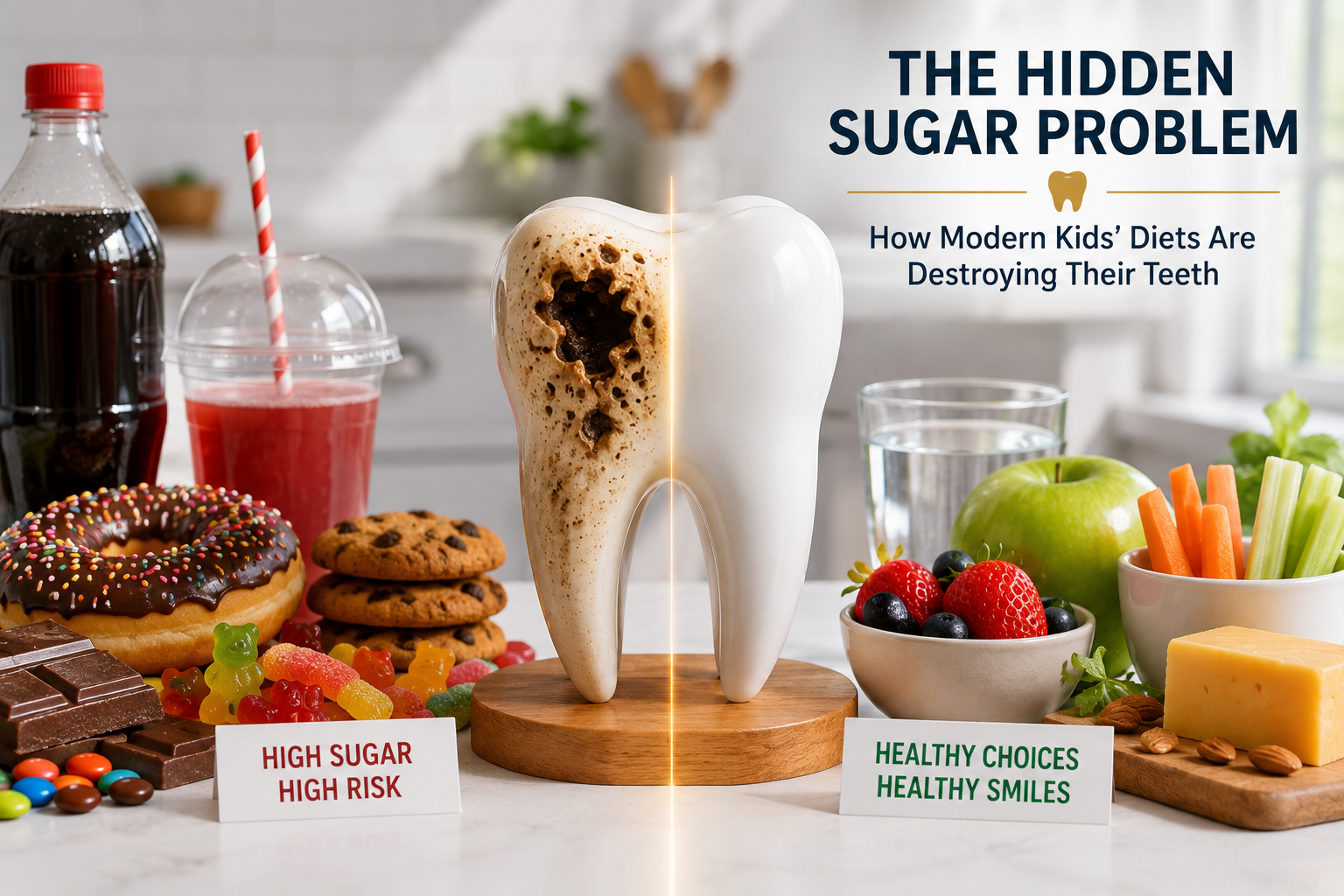
As parents, we meticulously check food labels for artificial colors, preservatives, and allergens. Yet, there’s a stealthy culprit quietly sabotaging our children’s health right under our noses: hidden sugars. It’s not just the candy bars and sodas we need to worry about—it’s the “healthy” snacks, morning juices, and seemingly innocent foods that are driving an epidemic of childhood tooth decay.
The Alarming Reality: By the Numbers
Children affected by early childhood caries worldwide.
Average sugar intake (Recommended is under 19g/day).
Children ages 6–8 have experienced cavities.
Alliance for a Cavity-Free Future initiatives ongoing.
Why Sugar Causes Cavities
To protect your child’s teeth, it helps to understand the science of a cavity. Our mouths are full of bacteria—some good, some bad. The bad bacteria absolutely love sugar.
When your child consumes sugary foods or drinks, these bacteria feed on the sugars and produce an acidic byproduct. This acid immediately begins attacking the hard outer layer of the tooth, known as the enamel. Over time, repeated acid attacks break down the enamel, creating a tiny hole. This hole is a cavity.
Sugar begins attacking tooth enamel within minutes. The “acid attack” lasts for about 20 minutes after eating. If your child sips on a sugary drink all afternoon, their teeth are under continuous attack!
Sneaky Sources: The Hidden Sugars
The most dangerous sugars are the ones masquerading as health foods. Here is a breakdown of common culprits and healthier alternatives for your family:
Tooth-Friendly Snack Swaps
Building a cavity-free diet doesn’t mean depriving your kids of delicious food. Here are some of our favorite tooth-approved snacks that naturally clean teeth and build strong enamel.
Apples scrub teeth, cheese neutralizes acid.
Crunchy carrots stimulate healthy saliva flow.
Fibrous celery acts like a natural toothbrush.
High in calcium and probiotics for oral health.
Always choose water instead of juice whenever possible. If your child must have juice, serve it only with meals rather than letting them sip it throughout the day. The extra saliva generated during a meal helps wash away the sugars.
How You Can Protect Your Child
- Limit Snacking Frequency: Constant snacking means constant acid attacks. Stick to designated meal and snack times.
- Read Labels Carefully: Sugar hides under many names (high fructose corn syrup, dextrose, maltose). Check the grams of “Added Sugars”.
- Water is the Best Defense: Encourage your child to drink water after eating sugary or sticky foods to help wash away residue.
- Supervise Brushing: Children under 8 usually don’t have the motor skills to brush effectively on their own. Help them brush twice a day for two minutes.
What Our Children’s Dental Team Wants You to Know
“Your child’s diet shapes their smile every single day. Small nutrition choices today help prevent cavities tomorrow. We aren’t asking for perfection—we’re asking for awareness. A balanced diet combined with consistent children’s dental care is the absolute best gift you can give your child’s health.”
Schedule dental checkups every six months. We can spot the early signs of enamel demineralization before it turns into a painful cavity, and provide protective treatments like fluoride varnishes and dental sealants.
Frequently Asked Questions
How much sugar should my child eat?
Is fruit bad for teeth?
Are juice boxes healthy?
Can cavities heal naturally?
How often should children visit the dentist?
Sources & References
- Centers for Disease Control and Prevention (CDC) – Children’s Oral Health
- American Academy of Pediatric Dentistry (AAPD) – Diet and Nutrition Guidelines
- World Health Organization (WHO) – Sugars intake for adults and children
- Harvard School of Dental Medicine – Nutrition and Oral Health
- Journal of the American Dental Association (JAMA)