
Category: Family Dental Education

Helpful dental education for every member of the family.

  • Finding the Right Dentist in Paris, TX

    Finding the Right Dentist in Paris, TX

    Your child deserves dedicated, compassionate dental care. Here’s your guide to choosing the best children’s dentist for your child’s needs.
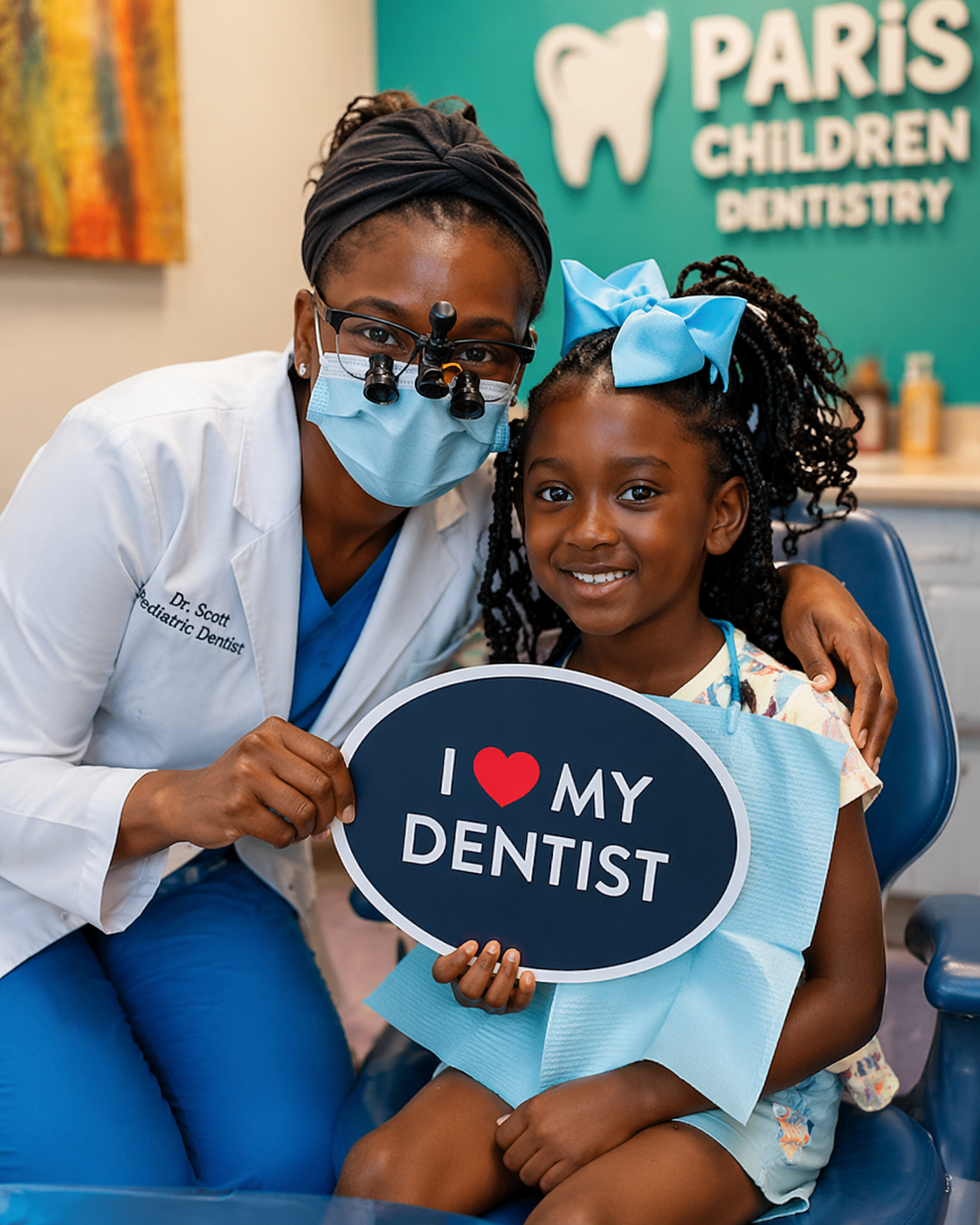
    Dr. Scott with young patient holding I Love My Dentist sign at Paris Children's Dentistry

    Dr. Scott with a happy patient at Paris Children’s Dentistry

    Choosing the right dentist for your child is one of the most important healthcare decisions you’ll make as a parent. The early dental experiences your child has can shape their attitude toward oral health for a lifetime. In Paris, Texas, families want a dentist in paris tx who combines expertise with genuine warmth—someone who makes children feel safe, comfortable, and even excited about their dental visits.

    But with several options available, how do you know which children’s dentist in Paris TX is the right fit for your family? This guide will help you understand what to look for and why Paris Children’s Dentistry, led by Dr. Scott, has become the trusted choice for so many local families.

    What to Look for in a Children’s Dentist

    Not all dentists are created equal when it comes to treating children. Here are the essential qualities to prioritize.

    Dedicated Focus on Children

    A dedicated children’s dentist brings deep experience focusing exclusively on children’s oral health and development within a family-friendly setting.

    Child-Friendly Environment

    A welcoming, colorful office designed to reduce anxiety and make dental visits fun rather than frightening for children.

    Patient & Gentle Approach

    Dentists who communicate at a child’s level, use age-appropriate explanations, and prioritize comfort throughout every procedure.

    Positive Reviews & Reputation

    Families in Paris trust recommendations from other parents who have experienced compassionate, quality care firsthand.

    Red Flags to Watch Out For

    Be cautious of practices that exhibit these warning signs:

    • Rushed appointments with little time for questions
    • Staff who aren’t patient or engaging with children
    • Outdated equipment or facility
    • Lack of preventive education focus
    • No emergency contact information provided
    • Inflexible scheduling or limited availability

    Why Paris Families Choose Dr. Scott

    Paris Children’s Dentistry checks all the boxes for what families need in a family dental practice focusing on children.

    Experienced Children’s Dentistry

    Dr. Scott’s deep experience ensures your child receives the highest standard of care in a welcoming setting.

    Welcoming, Kid-Focused Space

    Our office is designed specifically for children, making every visit comfortable and enjoyable.

    Compassionate, Patient Care

    We take time to build trust, answer questions, and make sure every child feels safe and valued.

    Community Trust

    Paris families have trusted us for years, as reflected in our outstanding reviews and word-of-mouth referrals.

    Experience the Difference at Paris Children’s Dentistry

    From the moment you walk through our doors, you’ll see why so many Paris families trust us with their children’s smiles. Dr. Scott’s approach combines clinical excellence with genuine care for every child.

    Ready to Find Your Child’s Dental Home?

    We’d love to welcome your family to Paris Children’s Dentistry. Contact us today to schedule your child’s first visit or to learn more about our practice.

    Call Us

    Office Hours

    Mon-Thu: 8AM-5PM

    Fri: 8AM-12PM

    Visit Us

    3220 Lewis Lane

    Paris, TX 75460

    Meet Your Family Dentist in Paris, TX

    Learn why families choose Paris Children’s Dentistry, explore care for children and families, or review adult and caregiver dentistry.

  • Dental Sealants for Children and Adults: What Paris Families Should Know

    Dental Sealants for Children and Adults: What Paris Families Should Know

    At many family dental visits, the conversation about sealants begins with a simple look at the back teeth. A child may be there for a routine cleaning, a teenager may expect an ordinary checkup, or an adult may be surprised when the dentist points out deep grooves in a molar. Those grooves are normal, but they can create small spaces where food and plaque settle and where a toothbrush may not clean as easily.

    That is where dental sealants may help. A sealant is a thin protective coating placed on the chewing surface of a back tooth. It flows into the pits and grooves, then hardens into a barrier that can help lower the risk of cavities in those areas. Sealants are often discussed for children and teens, but some adults may benefit too. The decision depends on the individual tooth, dental history, cavity risk, and a dentist’s examination.

    Why the back teeth start the conversation

    Molars do much of the work when we chew. Their uneven surfaces help break down food, but those same hills and valleys can be difficult to keep completely clean. A family may be doing the right things at home—brushing with fluoride toothpaste, cleaning between teeth, and keeping regular dental visits—and still have teeth with grooves that deserve a closer look.

    A sealant adds another layer to that preventive routine. It does not replace home care or regular examinations. Instead, it is one tool a dentist may recommend when the shape and condition of a tooth make added protection useful. This is why the conversation usually starts with an examination rather than a one-size-fits-all recommendation.

    The same question can come up at different ages

    For many families, sealants first enter the conversation when a child’s permanent molars come in. These new back teeth need to last for decades, and their grooves may be especially vulnerable while a child is still developing consistent brushing habits. A dentist may also consider a sealant for certain primary teeth when the tooth’s shape and cavity risk support it.

    Years later, the question may come up again. A teenager’s eating habits, orthodontic care, or past cavities may change the preventive plan. An adult may have an unrestored molar with deep grooves or a recent history that makes the tooth worth evaluating. Age alone does not decide the answer.

    The evidence for sealants is strongest in children and adolescents. Research directly studying adults is more limited, so an adult recommendation should be individualized. The important point for families is that the dentist evaluates the person and the tooth—not simply the age printed on a chart.

    What happens if a sealant is recommended?

    Once the family and dentist decide to proceed, the visit follows a focused sequence. The dental team cleans the tooth and keeps it dry. The chewing surface is prepared so the material can bond, and the liquid sealant is guided into the grooves. The material is then hardened, often with a curing light, and the dentist checks the finished surface.

    The exact steps and material can vary with the tooth and the clinical situation. That makes the visit a good time to ask what will be used, why it was selected, and what the dentist wants the family to watch for afterward.

    When the appointment ends, the sealant becomes part of the person’s ongoing preventive care—not the end of it.

    The protection continues after the visit

    A sealant may remain useful for several years, but teeth and dental materials experience daily wear. At future preventive visits, the dentist checks whether the coating is still intact and whether it should be monitored, repaired, or replaced.

    This follow-up matters because a sealant is not a permanent guarantee against cavities. Brushing, cleaning between teeth, diet, fluoride exposure, regular examinations, and changes in a person’s cavity risk still influence oral health. The best result comes when the sealant works alongside those habits rather than taking their place.

    Sometimes the examination leads to a different answer

    Not every groove needs a sealant, and not every tooth is a candidate. The dentist first determines what is happening beneath and around the chewing surface.

    Evidence-based guidance supports sealants for sound pits and grooves and, in selected situations, for early areas that have not formed a cavity in the tooth. If decay has progressed further, a different treatment may be more appropriate. That is one reason families should avoid thinking of sealants as a product they simply choose from a list. They are a clinical recommendation made after an examination.

    Turning the recommendation into a family decision

    Before deciding, families may want to ask about the material, the teeth being considered, how the sealant will be checked, and what preventive care should continue at home. Anyone with questions about ingredients, allergies, or medical and dental history should discuss them with the dentist before treatment.

    Insurance is another part of the decision. Dental benefits may vary by plan, age, tooth, frequency rules, and clinical circumstances. Coverage is not guaranteed, and an estimate is not a promise that a plan will pay. Families can review PCD’s insurance and payment information and confirm plan details before treatment.

    A useful conversation with the dentist may include:

    • Which teeth, if any, may benefit from sealants?
    • What makes those teeth more or less likely to develop cavities?
    • What material would be used?
    • How will the sealants be checked over time?
    • What other preventive care should continue at home and in the office?
    • What should be confirmed with the dental plan?

    A preventive conversation for the whole family

    Paris Children’s Dentistry is a family dental practice serving children, teens, adults, and families. A sealant conversation may begin with a child’s new molar, a teenager’s changing needs, or an adult tooth that deserves a closer look. Wherever it begins, the goal is the same: understand the tooth, weigh the options, and choose care that fits the individual.

    If your family is looking for a dentist in Paris, TX, our team can evaluate your preventive-care needs and explain whether dental sealants may be appropriate for specific teeth.

    Call 903-905-4905 or request an appointment. An examination is required before a treatment recommendation can be made. You can also explore our children’s and family dental services.

    Sources and clinical references