
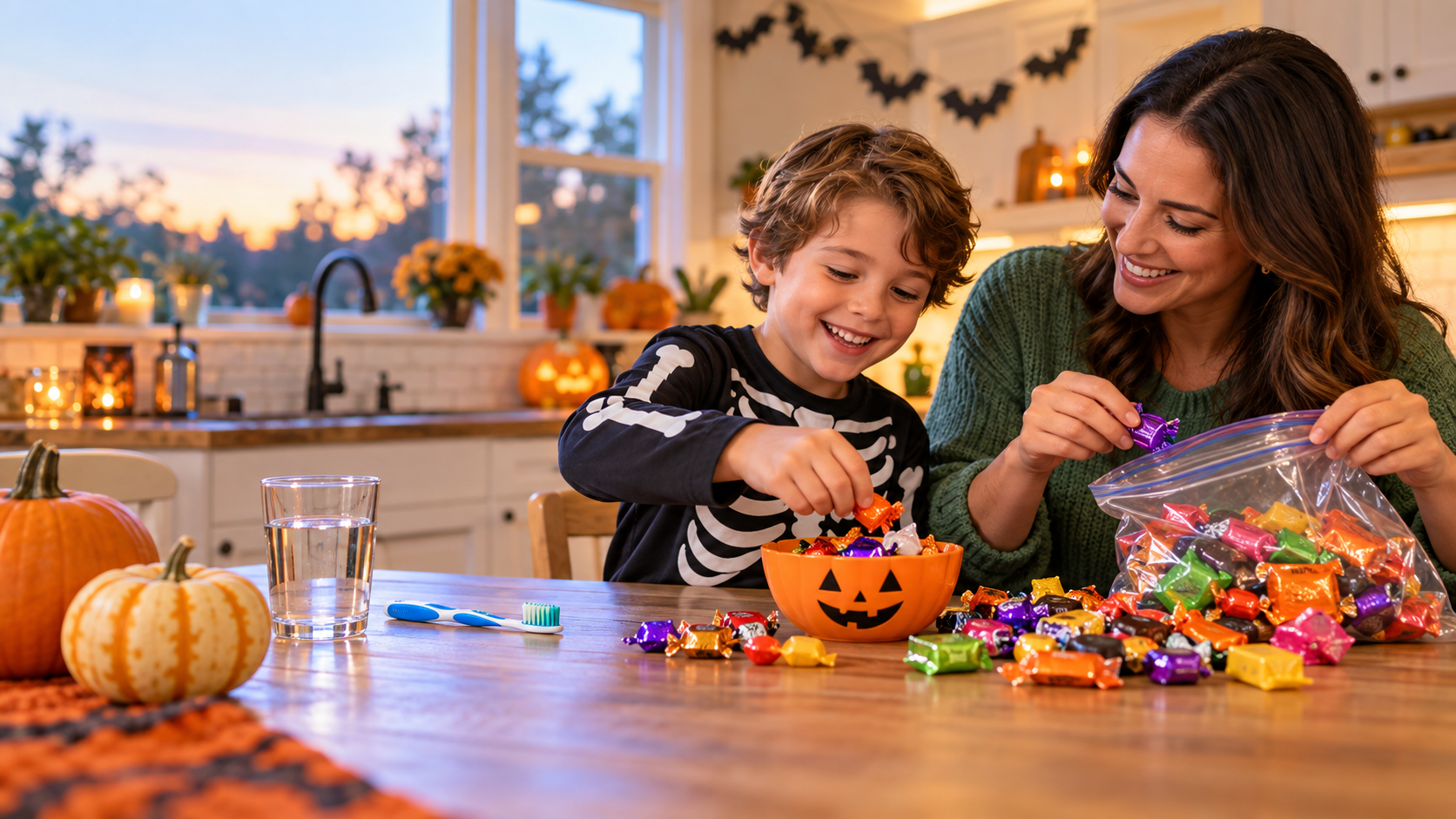
Halloween candy does not have to mean cavities.
Children can enjoy their favorite treats while parents take a few practical steps to protect their teeth. The most helpful approach is to serve candy with or soon after a meal, avoid all-day grazing, offer plain water, and keep brushing and flossing consistent.
At Paris Children’s Dentistry, we want families to enjoy Halloween without turning it into a battle over every piece of candy. Here is a realistic plan that can help.
Is Halloween candy bad for kids’ teeth?
Candy can increase the risk of tooth decay because bacteria in the mouth use sugar to produce acids. Those acids can weaken tooth enamel over time.
But the total amount of candy is not the only consideration. How often a child eats it—and how long the teeth are repeatedly exposed—also matters.
When children snack on candy throughout the day, the mouth experiences repeated acid exposures with less time to recover. Serving a few selected treats at one planned time is generally easier on the teeth than letting children graze from their candy bag all afternoon.
Why does the timing of Halloween candy matter?
A helpful rule is to offer Halloween candy with a meal or shortly afterward.
Saliva production increases during meals. Saliva helps wash away food particles, neutralize acids, and support the minerals that protect tooth enamel. The American Dental Association recommends limiting frequent sugary snacking and enjoying treats with meals when possible.
Try establishing a predictable “candy time” after dinner rather than allowing unrestricted access throughout the day. This gives children a chance to enjoy their treats while reducing repeated exposure.
Which Halloween candy is toughest on children’s teeth?
Some candies remain on the teeth longer or expose enamel to additional acids.
Sticky and gummy candy
Gummies, caramels, taffy, and similar candies can cling to grooves and spaces between the teeth. Because they are harder for saliva to clear, sugar may remain in contact with the teeth longer.
Hard candy
Hard candy and lollipops dissolve slowly, extending the time teeth are exposed to sugar. Biting hard candy can also chip or crack a tooth.
Sour candy
Sour candies are often both sugary and acidic. That combination can temporarily soften the enamel, making sour candy one of the more challenging choices for teeth.
Chocolate
Plain chocolate generally clears from the mouth more quickly than sticky or hard candy. It still contains sugar, but a small amount of chocolate eaten at one planned time is typically a more tooth-friendly option than candy that sticks to the teeth or is sucked for a long period.
A simple Halloween candy plan for parents
You do not need an elaborate system. Start with these practical steps.
1. Choose a few favorites
After trick-or-treating, let your child select the candy they are most excited to eat. Keeping the favorites can make it easier to remove treats they do not especially want.
2. Establish a planned candy time
Offer candy with dinner or shortly afterward instead of allowing children to snack on it throughout the day.
3. Serve plain water
Water helps rinse away loose food particles and sugars. It is a better companion to candy than juice, soda, sports drinks, or other sweet beverages.
4. Keep the regular bedtime routine
Brush for two minutes with fluoride toothpaste and clean between teeth as appropriate for your child’s age and development.
Parents may need to assist younger children to make sure every surface is cleaned. Avoid sending a child to bed immediately after eating candy without brushing.
5. Put the remaining candy away
Store candy somewhere out of sight rather than leaving the bowl or bag within easy reach. A planned portion is easier to manage when the full supply is not constantly visible.
Should children brush immediately after sour candy?
Not immediately.
Because sour candy is acidic, it can temporarily soften the enamel. Brushing while the enamel is softened may increase wear.
After sour candy, have your child rinse with plain water and wait approximately one hour before brushing. The ADA provides the same wait-time guidance after acidic foods and drinks.
For other candy, maintain the child’s usual brushing routine and avoid aggressive brushing.
Can sugar-free gum help?
For children who are old enough to chew gum safely, sugar-free gum with the ADA Seal can be helpful after eating.
Chewing sugar-free gum for about 20 minutes stimulates saliva, which helps clear food and neutralize acids. Gum does not replace brushing or flossing, but it can be a useful addition when brushing is not immediately available.
When should you call a children’s dentist?
Contact a children’s dental office if your child experiences:
- Ongoing tooth pain or sensitivity
- Swelling around a tooth or the gums
- A chipped or broken tooth
- A dark spot or visible hole in a tooth
- Pain when biting or chewing
- An injury involving the teeth or mouth
A routine preventive dental visit can also help identify small concerns before they become painful or require more involved treatment.
Paris Children’s Dentistry provides preventive and restorative dental care for children and accepts Texas Medicaid and CHIP. If your child is due for a checkup—or you have a concern after Halloween—call 903-905-4905 or request an appointment with our Paris, Texas team.
Frequently asked questions
Do children need to avoid Halloween candy completely?
No. A planned portion, plain water, and consistent brushing are more realistic than banning every treat.
Is chocolate better for teeth than gummy candy?
Plain chocolate generally clears from the mouth faster than sticky gummies, caramels, and taffy. Portion size and frequency still matter.
Should children brush immediately after eating candy?
Follow the normal brushing routine for most candy. After sour or acidic candy, rinse with water and wait approximately one hour before brushing.
What is the best drink to serve with Halloween candy?
Plain water is the simplest choice. Avoid combining candy with soda, juice, or other sweetened beverages.
What if my child already has tooth pain?
Do not wait for the discomfort to become severe. Call our children’s dental office for guidance, particularly if pain is accompanied by swelling, fever, or difficulty eating.